The home page is the action list.
Orders due this week, forecast exceptions, incoming shipments, overdue orders — the four things that determine your week, on the screen you open first. Sales and operations read the same plan.
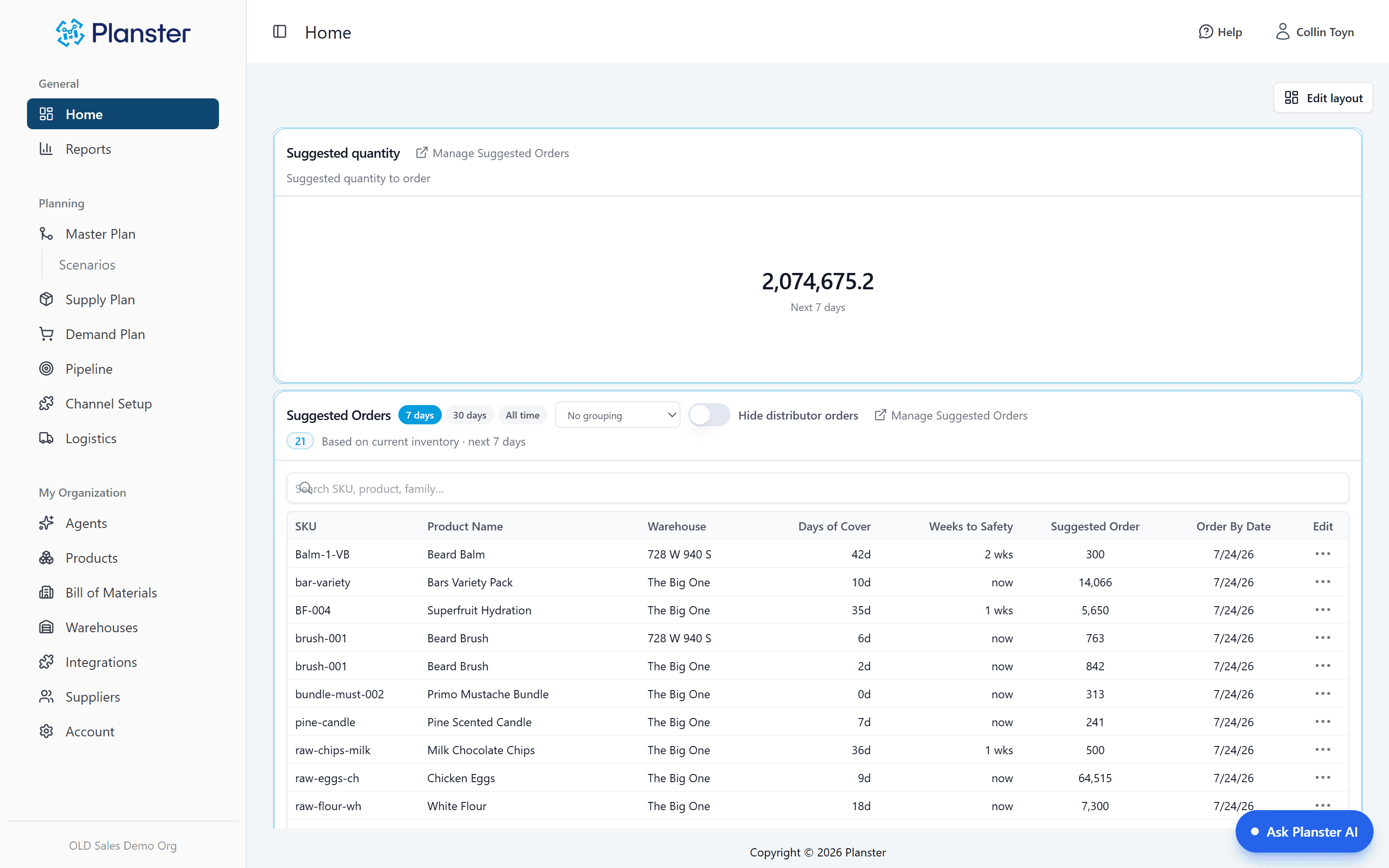
What needs doing, not what happened
Orders due this week, exceptions outside tolerance, shipments inbound, orders already overdue. A dashboard that reports last month is a report. This one is a queue.
One plan, two departments
Sales and operations work from the same demand plan. The recurring meeting where two spreadsheets get reconciled before the actual discussion can start stops being necessary.
Reporting is custom
You build the reports you need. There is no prebuilt report library — if a catalogue of canned reports is what you are shopping for, some competitors have one and we do not.
What the agent does with s&op dashboard
Every night
The morning digest is this list, ranked and delivered, so triage happens in your inbox and you open Planster when something actually needs you.
What it can’t do
It cannot clear an item, mark something handled, or decide something is done. The queue only moves when a person moves it.
The meeting that stopped being about the spreadsheets
The weekly S&OP call used to open with twenty minutes of reconciling two versions of demand before anyone could talk about the decision. Reading from one plan, the twenty minutes disappear and what is left is the actual disagreement: whether to buy ahead of a deal that has not closed.
How it fits together
Every capability runs on the same demand forecast, so each one makes the others more useful.
See your week on one screen
Connect your data and open the dashboard against your own numbers.