Four channels that behave nothing alike, in one plan.
DTC, Amazon, retail, and wholesale get planned separately, because they do not share a demand shape — then combined, because they share your inventory. Unlimited warehouses and 3PLs from one view.
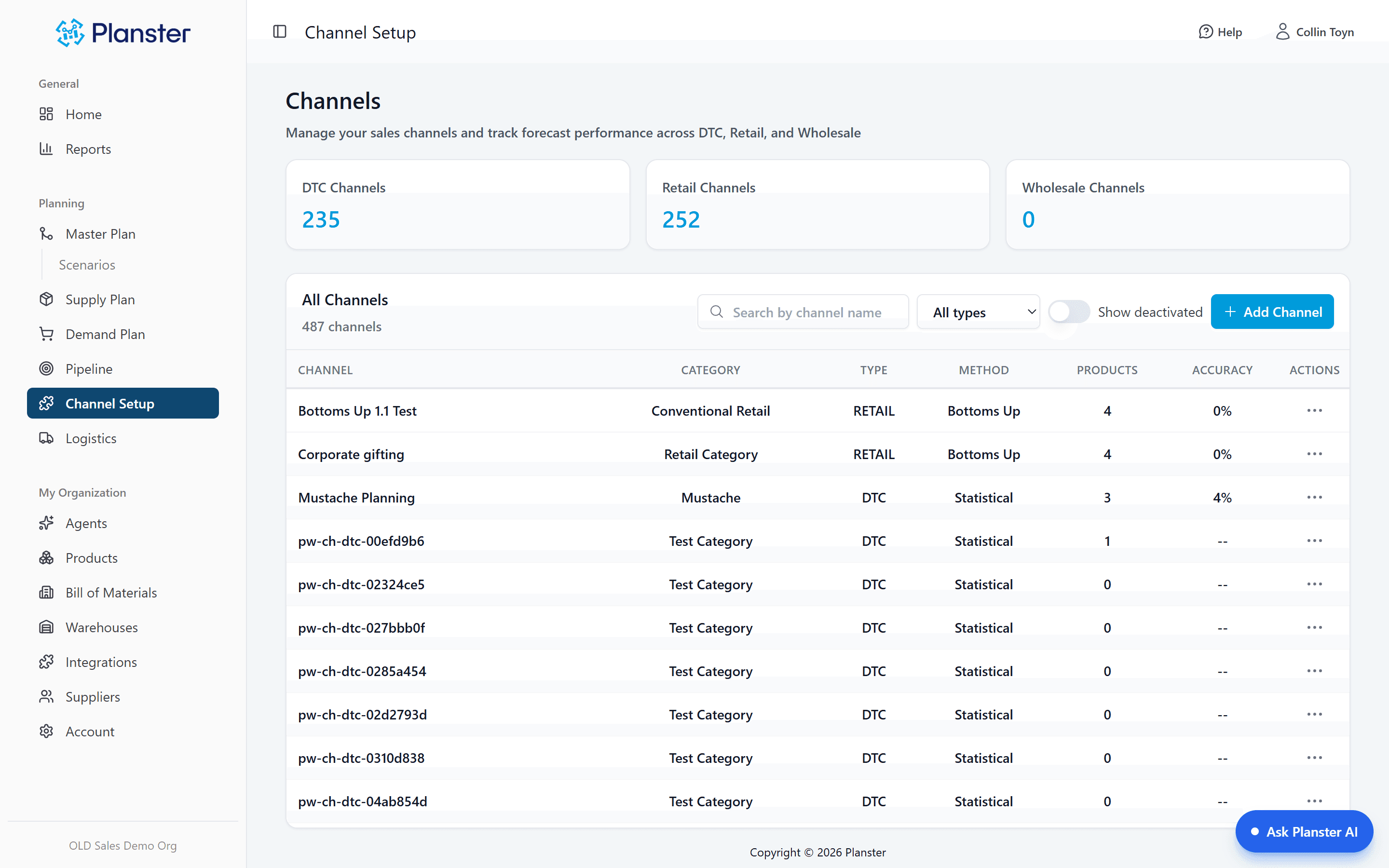
Separately, then combined
A DTC subscription base, an Amazon listing, and a 400-door retail rollout do not share a curve. Planned as one blended number they are wrong in three directions at once. Planster forecasts each channel on its own history and nets the total against one pool of inventory.
Demand split per warehouse
Knowing you need 40,000 units is half an answer. Planster splits demand across your warehouses and 3PLs so the other half — where to send them — comes with it.
One view, however many nodes
Unlimited warehouses and 3PLs, read from one screen instead of one portal per provider. No per-location pricing, no tier you outgrow when you add a coast.
What the agent does with multi-channel
Every night
The overnight run covers every channel, not just the loud one. A stockout building on Amazon while DTC looks healthy is on the morning list as its own item.
What it can’t do
It cannot move inventory between warehouses or reallocate stock across channels. It tells you the split is wrong; the transfer is yours.
Healthy in total, out of stock where it counted
A beverage brand read inventory as one number and it looked fine — eleven weeks of cover. The East Coast 3PL had two. The blended view had been averaging a surplus in one warehouse against a shortfall in another for a month. Split per warehouse, it is not a surprise, it is a transfer you make in week one.
How it fits together
Every capability runs on the same demand forecast, so each one makes the others more useful.
See every channel in one plan
Connect your carts, marketplaces, and 3PLs and look at the combined position. Setup takes days.