Find out you’re short the bottle before the run, not during.
Bills of materials for raw materials, and kitting for finished goods. Planster shows which production runs are coming and what each one consumes, with shared components planned in one place instead of three.
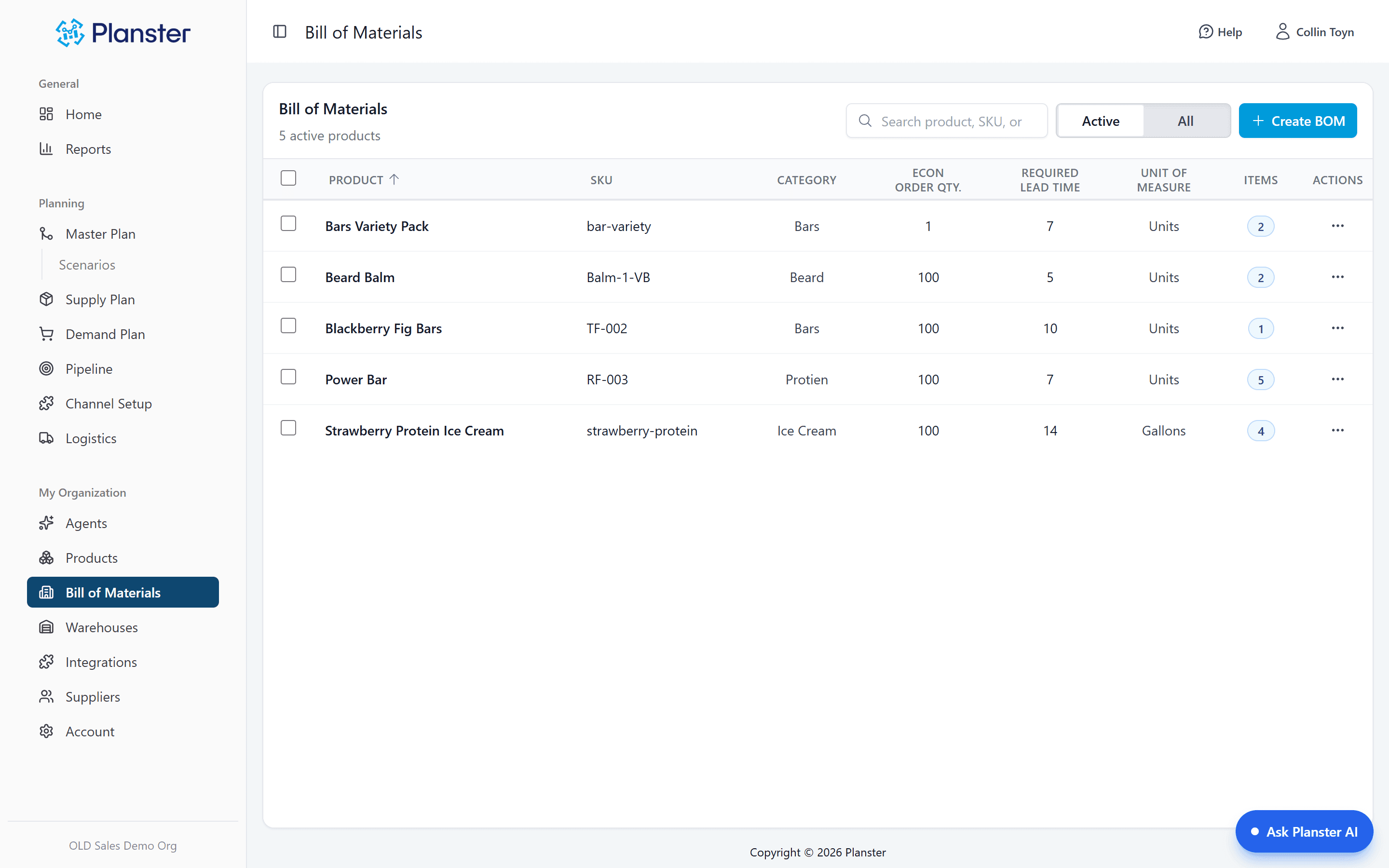
Shared components, planned once
Three SKUs using the same bottle is one procurement decision, not three. Planned separately — which is what a per-SKU spreadsheet forces — the shortfall only appears when the third run is already scheduled.
What each run consumes
The production runs coming up, and the component quantities each one draws down. The question "can we actually make this" gets answered before the co-man asks it.
Kitting for finished goods
Bundles and kits are assembled from components you also sell on their own. Both need planning, and the components need planning for both uses at once.
What the agent does with bom and kitting
Every night
The overnight run checks every SKU you hold, components included, so a raw material heading for a shortfall lands on the morning list the same way a finished good does.
What it can’t do
It cannot change a bill of materials, schedule a production run, or reallocate components between runs.
The same bottle, three times
Three SKUs share a 500ml amber bottle. Each was planned in its own tab against its own forecast, and each looked covered. The combined draw across two production runs in the same fortnight was not, and the discovery happened on the co-man’s floor. Planned in one place, that is a purchase order in week one.
How it fits together
Every capability runs on the same demand forecast, so each one makes the others more useful.
Plan the components too
Load a BOM and see what your next two production runs actually consume.