Know how far the plan has moved from the plan.
Keep a base plan beside the live one that is actually driving orders. Every promo, every scenario, and every override moves the working plan — the baseline is how you find out by how much.
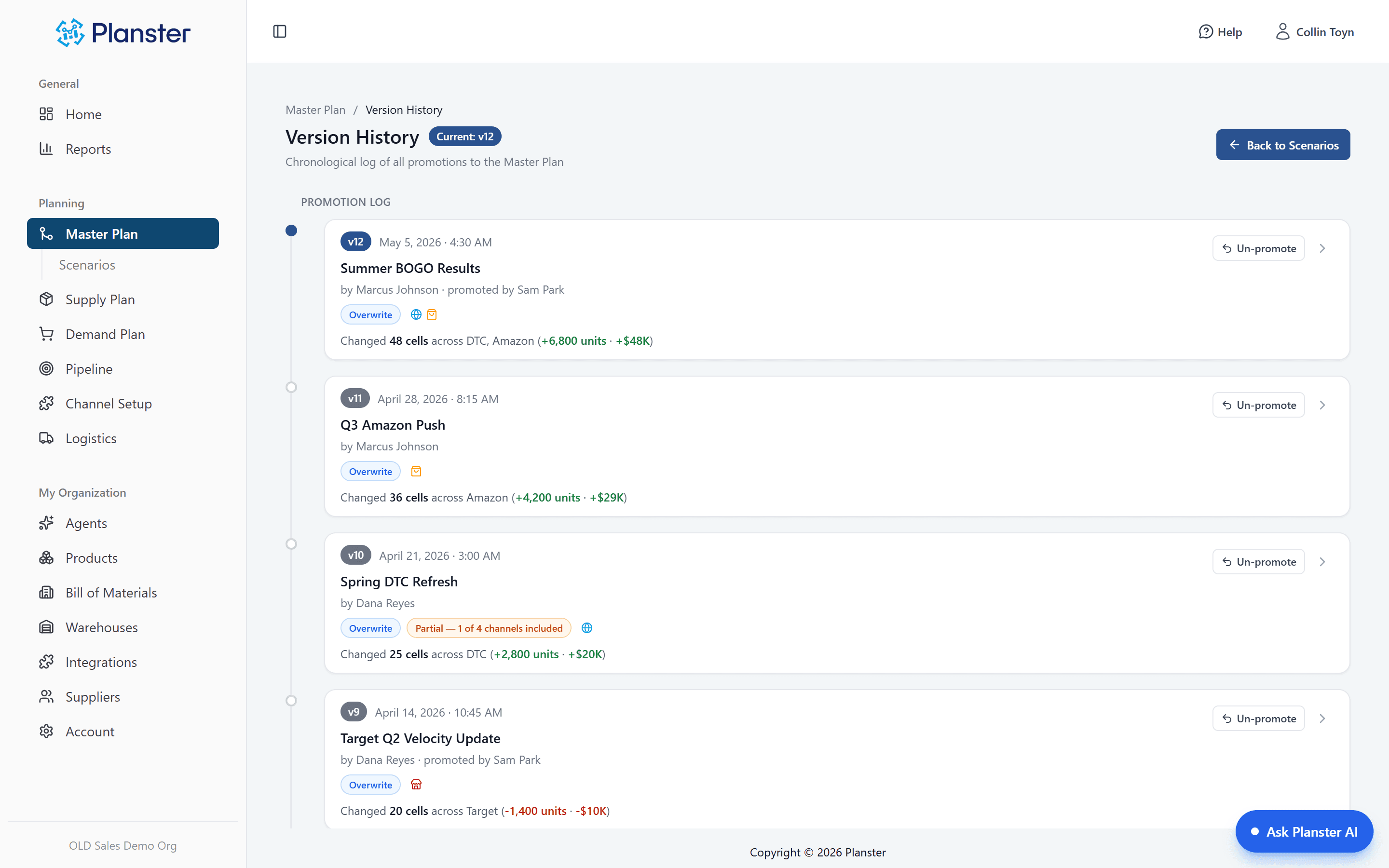
Two plans, on purpose
The base plan is what you committed to. The live plan is what you are buying against today. They are supposed to diverge — the question is whether anyone can say by how much.
The drift is the number
Six promotions, two launches, and a retail deal later, the working plan is a long way from January. That distance is the most honest read on how the year is actually going.
A yardstick for scenarios
When you promote a scenario, the baseline is what tells you whether the cumulative effect of everything promoted this quarter is still a plan you would have signed off on.
What the agent does with base vs live plan
Every night
The overnight run works against the live plan, so what the agent brings you every morning reflects what you are actually buying against today rather than the version you agreed to in January.
What it can’t do
It cannot promote a scenario, reset the base plan, or change either one. Moving the plan is always a human step.
Nine months and nobody could say by how much
By September the working plan bore no relationship to the annual operating plan — six promos, two launches, a rollout that got pushed. Everyone knew it had moved. Nobody could put a number on it, which made the budget conversation a matter of opinion. With a baseline kept beside it, the drift is a figure you read rather than argue about.
How it fits together
Every capability runs on the same demand forecast, so each one makes the others more useful.
Measure the drift
See a live plan against its baseline, with the distance between them as a number.