150+ systems, on a schedule, with nothing to update.
Warehouse data lands at 11pm, cart data at 7pm, forecasts regenerate at 7am. No exports to refresh, no formulas to overwrite, no Monday morning spent rebuilding the file that was right on Friday.
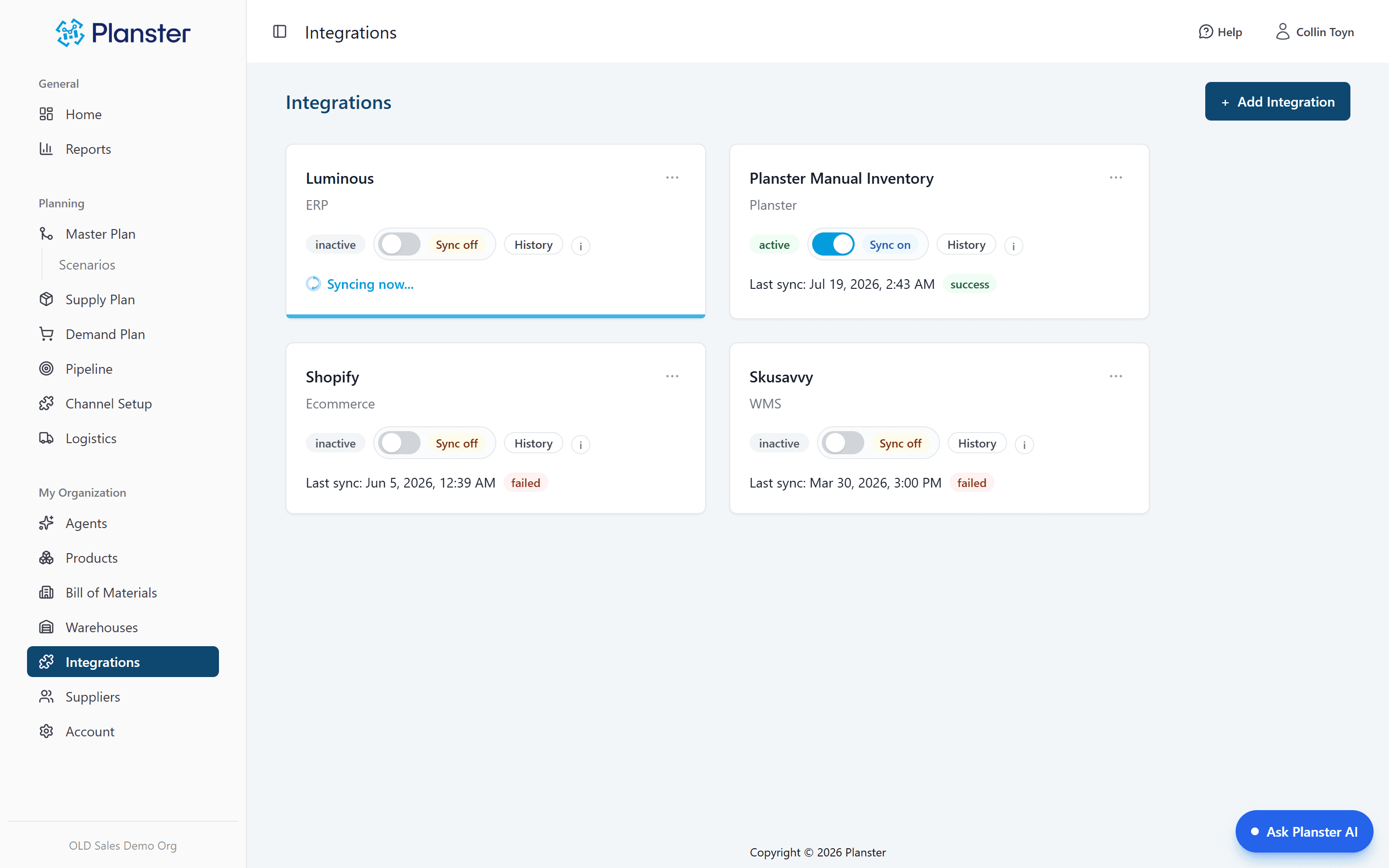
154 WMS and 3PL systems, 17 carts and marketplaces
Shopify, Amazon, Walmart, TikTok, ShipBob, ShipHero, Cin7, Extensiv and the rest, connected through Trackstar. Plus native accounting: Zoho and Luminous are live today, and QuickBooks Online, Xero, NetSuite, and Sage are rolling out.
On a schedule, not on request
The sync runs whether you remember it or not. What you open in the morning is current because it was refreshed overnight, not because someone re-ran an export.
Data out as well as in
Export all DTC demand, all retail demand, or one retailer at a time. Reporting is custom — you build what you need — and the export is there for whatever lives in someone else’s tool.
Credentials stored encrypted
Connection credentials are stored encrypted. Bolt-on, not rip-and-replace: Planster sits on top of the stack you already run.
What the agent does with data in and out
Every night
The agent works from this live synced data rather than a copy of it, which is why the figures in its answers can link to the in-app screen showing the same number.
What it can’t do
It cannot add, change, or disconnect an integration, and it cannot touch stored credentials.
The file that was right on Friday
Sales in Shopify, inventory in a 3PL portal, retail in an email thread with a broker, and a spreadsheet stitching all three together every Monday morning. It was accurate for about a day. Synced on a schedule, the plan is current when you open it, and the Monday morning rebuild stops existing.
How it fits together
Every capability runs on the same demand forecast, so each one makes the others more useful.
Connect what you already run
Planster sits on top of your existing stack. Most brands are synced and planning within days.